Saint Valentino Berrio Ochoa Vinh was born on February 14, 1827, in Elorrico, Diocese of Vich, Spain, into a devout but poor family. At age 18, he entered the Logroño seminary, then temporarily left to assist his parents. In 1851, he was ordained a priest.
After two years serving as spiritual director at the seminary, he joined the Dominican Order, driven by missionary zeal. When bidding farewell, someone asked him: “Where are you going, and when will you return?” He replied: “I am going so that my homeland will have someone to become a saint.”
In 1857, he arrived in Manila, and on March 30, 1858, set foot in Vietnam - precisely as anti-Christian persecution was intensifying. In a letter to his family, he wrote: “This missionary field sees not a single bright day; there is not a day when I am not struggling to maintain a cheerful countenance; nor a day without suffering to weep over…”
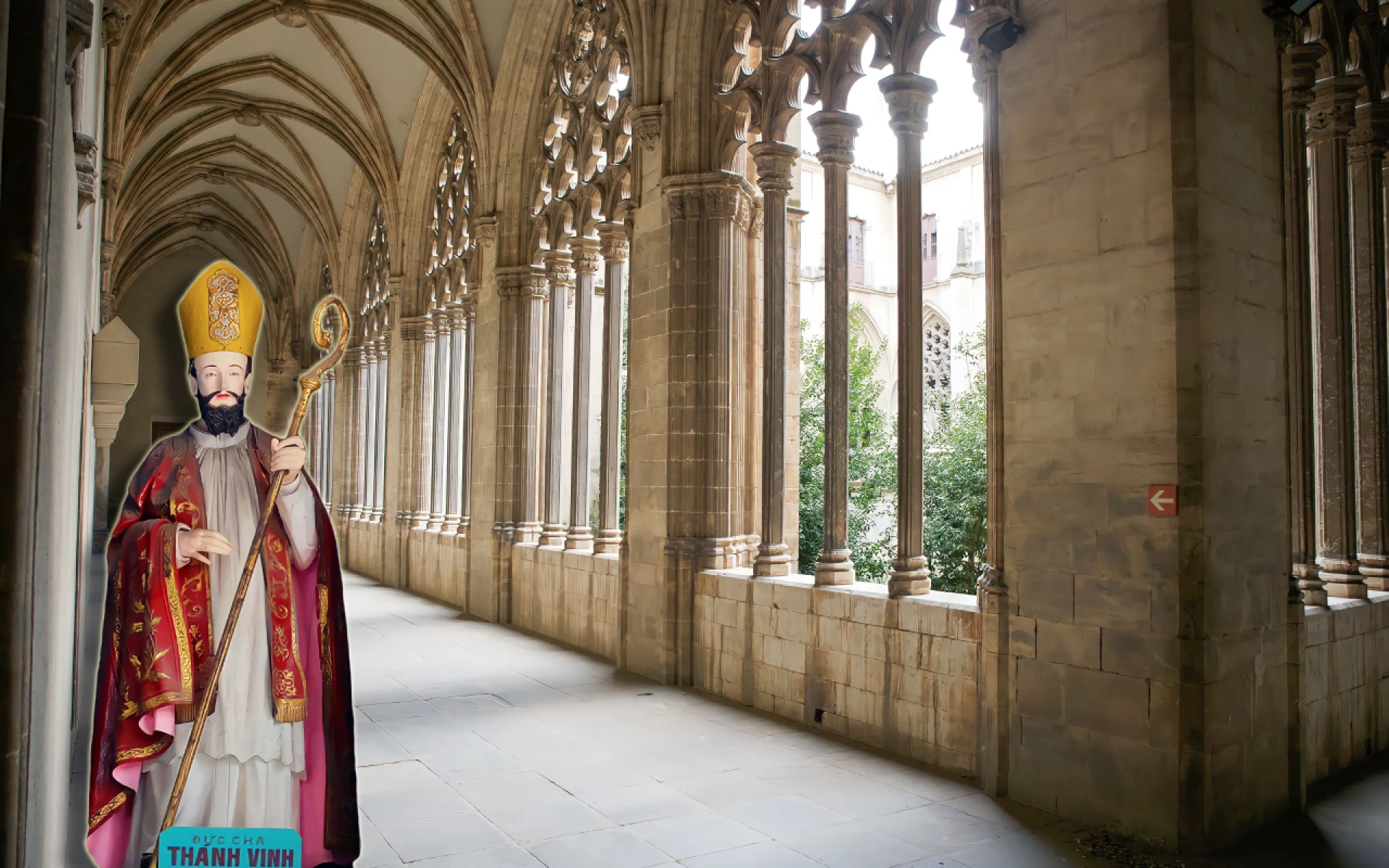
Facing the imminent threat of martyrdom, Bishop Sampedro Xuyên appointed him coadjutor bishop. His episcopal ordination took place discreetly before dawn on June 26, 1858, at the house of Mr. Trùm Chi in Ninh Cường: no choir, no congregation; the mitre was crafted from cardboard covered in metallic paper, and the crozier was a bamboo cane wrapped in paper - hence his enduring title, the “Bamboo-Staffed, Paper-Mitered Bishop.” He was only 31 years old and had been in Vietnam for just three months.
After Bishop Xuyên was executed by lingchi (death by slicing) on July 28, 1858, Bishop Vinh took refuge in various locations, eventually hiding for an extended period in a secret chamber at the home of Mr. Thăng in Hương La village, Tử Nê parish (Bắc Ninh). There, he continued teaching theology to seminarians, copying letters, and preparing documents to be sent to Rome.
He once traveled with Fr. Riaño Hòa to Kẻ Mèn to choose the Immaculate Conception as patroness of the diocese and pledged to build a cathedral - a promise later fulfilled at Phú Nhai.
Even amid great danger, he maintained a spirit of optimism and trust. In an August 1860 letter to his mother, he wrote: “Though I am an ‘old man,’ I still leap across muddy puddles as nimbly as a squirrel… and my bearded face will surely make even the oldest demons in hell tremble.”
In 1861, Emperor Tự Đức’s Phân Sáp edict further escalated the crisis. Bishop Vinh and Fr. Almato Bình moved to Hải Dương and stayed at the home of a non-Christian deputy village chief - but were betrayed by the man’s nephew. They were arrested on October 25, 1861, and later reunited with Bishop Liêm, who had been captured five days earlier.
On the morning of November 1, 1861, the three were led to the Năm Mẫu execution ground. Bishop Vinh’s cage was placed in the center; calmly praying, his serene and joyful expression astonished onlookers. After a brief prayer, all three were beheaded.
Their bodies were initially buried at the execution site, later exhumed and reinterred in Thọ Ninh, then in Kẻ Mốt. Eventually, Bishop Vinh’s relics were transferred to Macao, and finally returned to his native Spain.
He was beatified by Pope Pius X on May 20, 1906, and canonized by Pope John Paul II on June 19, 1988.
Saint Valentino Berrio Ochoa Vinh - the “Bamboo-Staffed, Paper-Mitered Bishop” amid persecution - Vietnamese Martyrs
Share:

Roman Catholicism Last updated: December 30, 2025
Discover the powerful faith journey of Saint Valentino Berrio Ochoa Vinh, a Dominican bishop martyred in Vietnam in 1861, who once said: “I am going so that my homeland will have someone to become a saint.”
Found this article helpful? Share it!
Share: