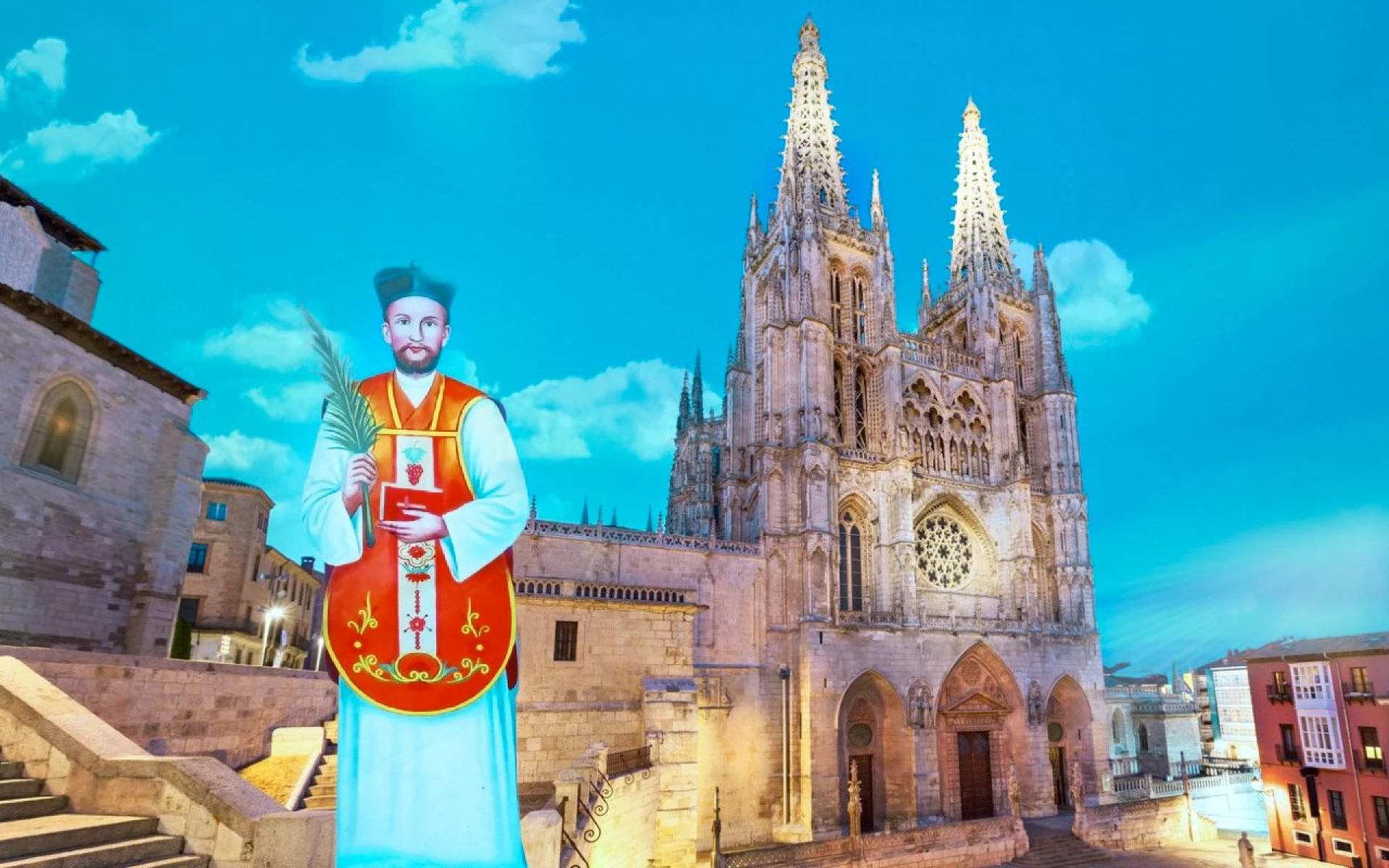
Saint Alonso de Leciniana was born on October 26, 1702, in Spain. In 1723, he joined the Dominican Order and made his solemn profession, later being ordained a priest at the age of 25 (1727). In November 1730, together with 25 young missionaries of the order, he arrived at the port of Manila and was assigned to preach the faith in the Eastern Diocese of Đàng Ngoài (Tonkin).
Learning Vietnamese and taking the Vietnamese name Đậu, the priest began his pastoral ministry across a vast region with few personnel. He continuously traveled through districts such as Kim Động, Tiên Lữ, Thần Khê (Hưng Yên), and Vũ Tiên (Thái Bình) to care for his flock.
On November 29, 1743, while celebrating Mass at Lục Thủy, he was surrounded by mandarin soldiers led by an apostate Christian. He initially managed to escape, taking the Blessed Sacrament with him, but was eventually captured and beaten. Before the tribunal, when interrogated by the investigating mandarin, Father Đậu calmly professed: "My duty is to teach the law of God, which is a holy and just law... I preach the law of the Lord in heaven, exhorting the people to live righteously and virtuously, to practice virtue, and to shun the path of iniquity."
Thanks to a sympathetic mandarin, he was transferred to Đông prison, where he was imprisoned together with Father Gil de Federich – Tế. There, the two priests had the opportunity to support each other, hearing each other's confessions and jointly celebrating Mass. In the year 1744 alone, Father Đậu administered the Sacrament of Baptism to 33 catechumens and heard 620 confessions.
On January 22, 1745, during the rule of Lord Trịnh Doanh, this witness of the faith was beheaded at the Đông Mơ execution ground. His body was buried at the Lục Thủy Seminary.
In 1906, Father Alonso de Leciniana Đậu was elevated to the rank of Blessed, and on June 19, 1988, he was canonized as a saint.
Saint Matthew Alonso de Leciniana – Đậu - Priest (1702 - 1745) - Vietnamese Martyrs
Share:

Roman Catholicism Last updated: February 14, 2026
The priest Matthew Alonso de Leciniana - Đậu (1702-1745) crossed the ocean from Spain to sow seeds of faith and love in the Eastern Diocese of Đàng Ngoài (Tonkin). That journey ended at the execution ground, but his legacy of faith endures forever.
Found this article helpful? Share it!
Share: