Few know that the saint glorified on the altar today had such a destitute childhood. Saint Lawrence Nguyễn Văn Hưởng was born in 1802 in the parish of Kẻ Sải (Tụy Hiền Commune, Hoài Yên District, Diocese of Hanoi) into a poor family. Orphaned at a young age, young Lawrence had to herd water buffalo for his uncle named Thang, who wholeheartedly loved and cared for his nephew.
At age 12, he went to see Father Tuấn and was accepted to stay at the rectory. Three years of studying Classical Chinese under the attentive tutelage of the parish priest served as a stepping stone for him to enter Vĩnh Trị Seminary. Upon graduation, the seminarian Lawrence Hưởng went to assist the Bạch Bát parish (Ninh Bình). It was from those days of living simply, humbly, and devotedly to the poor that people saw in him a special love, as if forged from his own impoverished childhood.
Called back by Bishop Retord (Liêu) to study theology and be ordained a priest, Father Lawrence was successively assigned to the congregations of Giang Sơn, Lạc Thổ, Yên Lộc, and then Bạch Bát. Wherever he went, the faithful recognized in him a zealous pastor, wholeheartedly teaching, visiting the lonely and the sick.
In 1855, amidst the Nguyễn dynasty's harsh crackdown on Christianity, Father Hưởng was arrested while on a boat traveling to administer sacraments to the faithful. Before the tribunal, the governor-general, seeing his pious countenance, promised: "If you agree to trample on the Cross, I will pardon you from the death sentence and allow you to become a monk at Non Nước pagoda." Father Hưởng calmly replied: "I know nothing about spirits or Buddhas, how could I stay at a pagoda?"
Not willing to concede, the mandarins requested that the priest recite a Catholic prayer, and he loudly intoned the Ten Commandments. The mandarins then brought forward two accusations common at the time: falsely accusing priests of "gouging out the eyes of the sick" (alluding to the Sacrament of Anointing of the Sick) and "not worshipping ancestors."
Father Hưởng's answer gave those present food for thought. He explained: "Please, Mandarins, do not listen to baseless rumors. We only anoint with holy oil the eyes, nose, mouth, hands, and feet to ask God to forgive the sins the sick person committed using them. As for our ancestors and grandparents, we constantly pray for them and perform good and virtuous deeds. It's just that we do not offer fruit or food, because we know for certain that our parents never return to eat or drink anything."
After much cajoling and interrogation proved futile, the imperial court approved the sentence of decapitation. At dawn on April 27, 1856, Priest Lawrence Nguyễn Văn Hưởng peacefully accepted death at the Ninh Bình execution ground during the reign of Emperor Tự Đức. The faithful of Vĩnh Trị village buried him with reverence.
On May 2, 1909, he was Beatified, and on June 19, 1988, he was Canonized.
Saint Lawrence Nguyễn Văn Hưởng - Priest (1802 - 1856) - Vietnamese Martyrs
Share:

Roman Catholicism Last updated: February 17, 2026
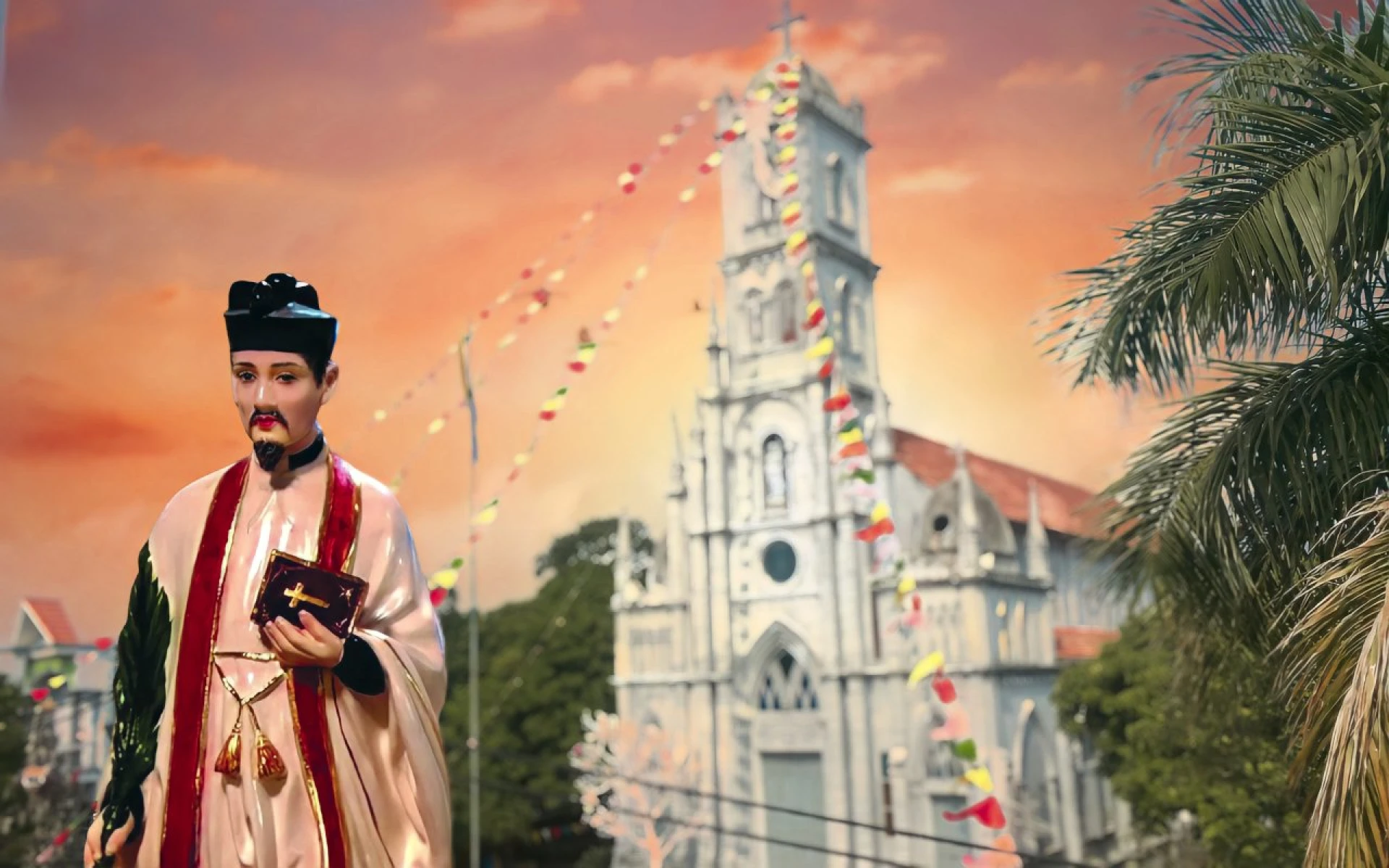
Portrait of Saint Lawrence Nguyễn Văn Hưởng - from an orphaned buffalo boy to a martyred priest, famous for his calm explanation of the faith before the tribunal.
Found this article helpful? Share it!
Share: