

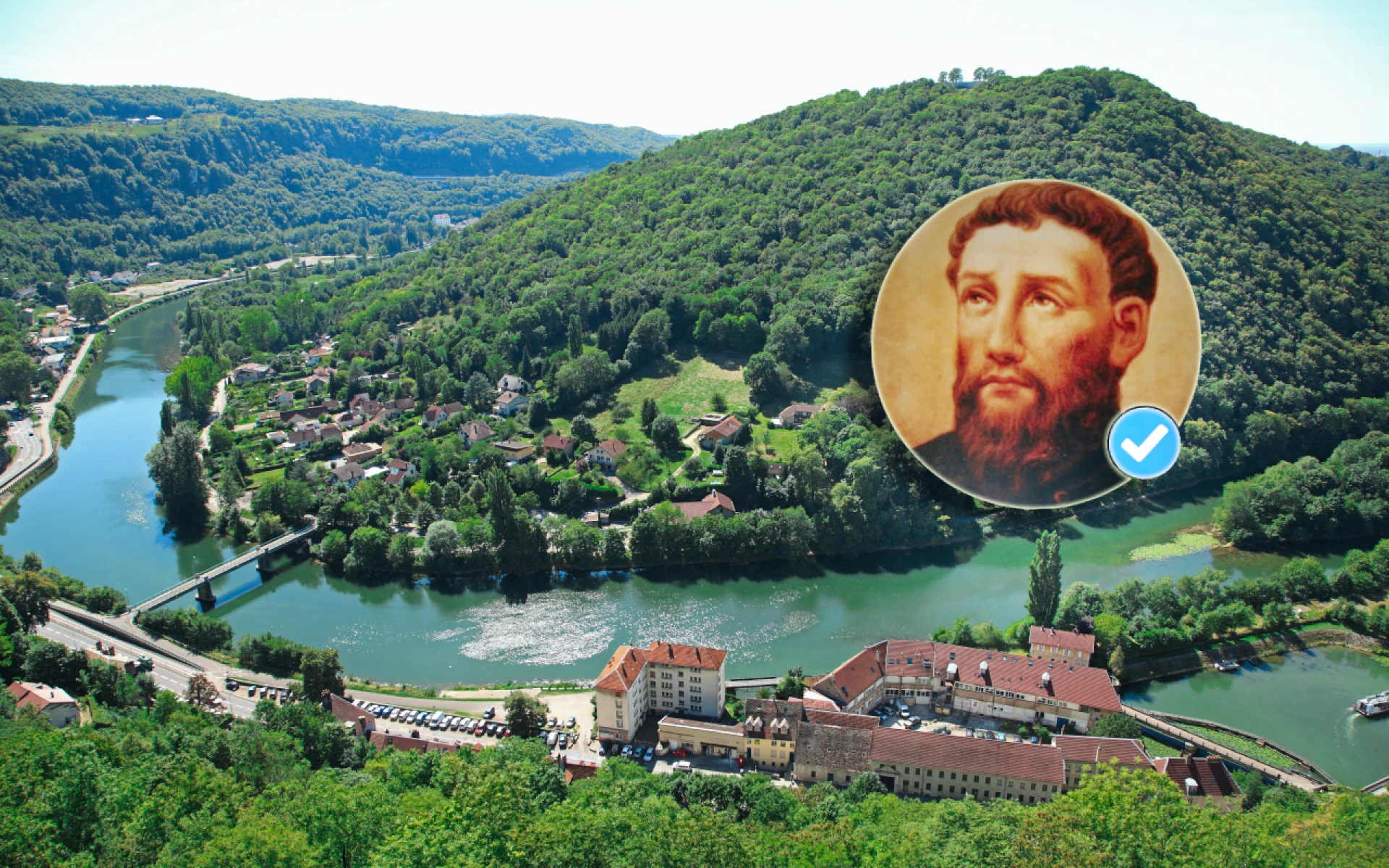
Born on August 17, 1803, into a poor family in the Diocese of Besançon (France), the young man Joseph Marchand soon felt the calling to dedicate his life. In 1826, he entered the Major Seminary of Besançon. Only two years later, seminarian Marchand requested to transfer to the Paris Foreign Missions Society and was ordained a priest on April 4, 1829.
On the very day he received the holy order, the newly ordained priest wrote a letter to his family with a resolute spirit: “Dear father and mother, I no longer hope to see my family again on earth, because I have set foot on the path of missionary work. May God grant me the grace to never look back.”
Arriving in Cochinchina in 1830, Father Marchand studied the Vietnamese language, took the Vietnamese name Du, and began pastoral care for Vietnamese faithful in Phnom Penh. Afterwards, he moved to take charge of a group of seminarians in Lái Thiêu along with 25 parish communities, comprising about 7,000 faithful.
Following the edict banning Catholicism issued by Emperor Minh Mạng on January 6, 1833, Bishop Tabert (Từ), Father Cuenot (Thể), along with the other missionaries, led the seminarians to flee to Thailand. Only Father Du remained resolute in staying behind, hiding in the Six Provinces region, serving the communities of Cái Nhum, Cái Mơn, Bãi Xan, Giồng Rùm, and residing in Mặc Bắc, Vĩnh Long.
On July 6, 1833, Lê Văn Khôi – the adopted son of the Left Marshal Lê Văn Duyệt – revolted against the imperial court, using the pretext of restoring the rightful eldest grandson of Emperor Gia Long. After seizing Gia Định Citadel and the Six Provinces region, he sought to draw in Catholics by promising to abolish the ban on Catholicism. Lê Văn Khôi invited Father Du to the citadel, but the priest firmly refused. Only later, fearing that Khôi would harm the Catholic faithful, did Father Du reluctantly go to Chợ Quán Parish, on the outskirts of Gia Định Citadel.
When the imperial army besieged the citadel, Lê Văn Khôi forced Father Marchand – Du inside and demanded that he sign a letter calling on the people and the faithful to rise up against the king. But Father Du replied resolutely: “I only know matters of the faith; as for the art of war, I am not skilled.” Faced with coercion, he threw all the letters into the fire.
After two years, Gia Định Citadel fell, and Father Du was captured, beaten, and imprisoned in a small cage that forced him to stay bent over day and night. On October 15, 1835, together with four other prisoners condemned to death, he was escorted to the imperial capital of Huế. Though tortured many times with red-hot iron pincers, Father Du remained steadfast, refusing to confess to the crime of aiding Lê Văn Khôi’s rebellion, only affirming: “I only concern myself with preaching the faith, praying to God, and celebrating Mass.”
Emperor Minh Mạng convicted him of being a “Western religious leader” (Tây dương đạo trưởng) and “aiding Lê Văn Khôi in rebellion” (phò tá Lê Văn Khôi làm phản). The execution by brutal punishment was carried out on November 30, 1835. The priest’s remains were subsequently thrown into the sea, and no relic of this saint was preserved.
Priest Joseph Marchand – Du was beatified on May 27, 1900, and canonized on June 19, 1988.
The content about the saint in this post is summarized and paraphrased from the book “Hạnh Các Thánh Tử Đạo Việt Nam” - Lives of the Vietnamese Martyrs (Vietnamese Bishops’ Conference, edited by Bishop Peter Nguyễn Văn Khảm, Tôn Giáo Publishing House, 2018). This post is not a verbatim copy but a re‑presentation based on the original source.