

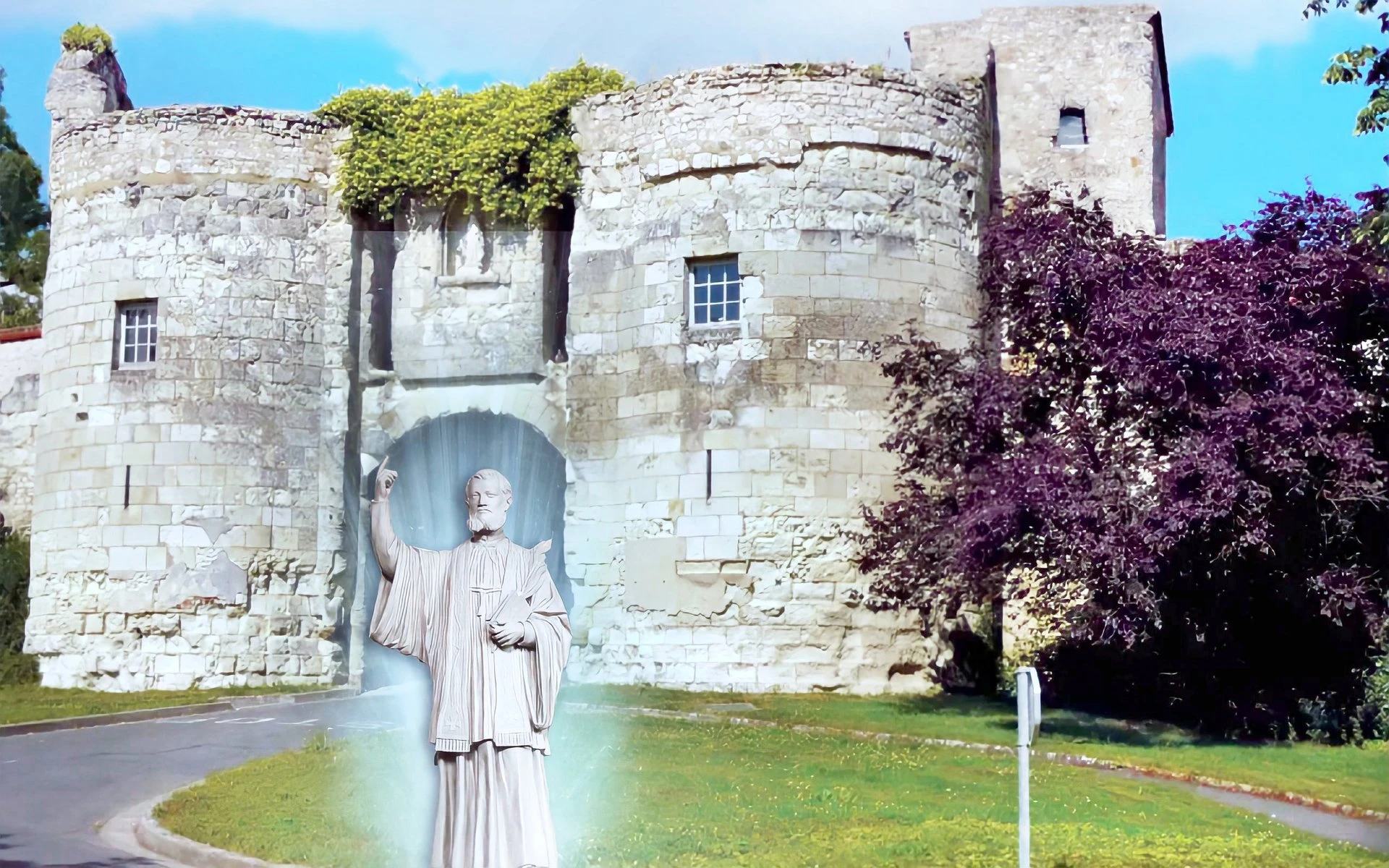
“If it is not possible to receive the Sacrament of Penance, then I trust that Our Lady will arrange for me to have perfect contrition, and the Anointing of the Sick will be replaced by the blow of the sword at the execution ground.”
These were the heartfelt final words of Saint Jean Charles Cornay, a martyr saint with unshakeable faith.
Saint Jean Charles Cornay was born on February 28, 1809, in the town of Loudun, Vienne department, France, into a wealthy and pious family. He entered the minor seminary in Montmorillon, also in the Vienne department in the Nouvelle-Aquitaine region, and later continued his studies at the Major Seminary of the Paris Foreign Missions Society (MEP).
While still a deacon, he was sent by his superiors to preach the faith in Sichuan province, China. However, because the mandarin’s forces there guarded strictly and did not allow missionaries to enter, his superiors directed Deacon Jean Cornay to go through the nation of Đại Nam to find a way to Sichuan. He arrived in Đại Nam at the same time as Bishop Liêu and two other missionary priests. After an incident prevented him from going to Sichuan, he went to the South to meet Bishop Du, was ordained a priest, and was called by the faithful by his Vietnamese name, Cố Tân.
Priest Jean Cornay was known as a gentle, honest, and humble man who offended no one and was admired and respected by all.
During an incident in the village of Bầu Nọ, Nộ Lực, there was a bandit leader named Đúc who was captured by the faithful and handed over to the mandarin, then imprisoned in Sơn Tây. When released, seeking revenge, he buried guns near the parish house and then reported to the mandarin that there was a Western priest in the village who possessed weapons and often communicated with the French enemy forces.
Immediately afterwards, the mandarin brought 1,500 soldiers to arrest Priest Cornay – Tân. He was placed in a cangue (wooden neck restraint), and together with forty people present there, they were bound and taken to the courthouse. Before three high-ranking mandarins seated to interrogate him, they first asked how many years he had been in Đại Nam, whether he had traveled by Western ship or passenger ship, whose house he had stayed at, and how large his parish territory was. When a mandarin questioned him: “Why did you, a teacher from the West, come to take over this country?”, Father Tân replied: “I only came to preach the faith.”
Although he did not admit to conspiring with the French enemy forces, when King Minh Mạng received the verdict from the mandarins of Sơn Tây province, he was still sentenced to death by slow slicing (lăng trì) as an enemy general.
When he learned that his sentence had been passed, Father Tân wrote a letter to Father Phan – a missionary priest – expressing his joy and desire: “I have rejoiced because of the words I have heard. I will enter the house of the Lord… I greatly desire to confess my sins. Can you arrange for me to receive the Sacrament of Penance? And if it is not possible… then I trust that Our Lady will arrange for me to have perfect contrition, and the Anointing of the Sick will be replaced by the blow of the sword at the execution ground.”
On September 20, 1837, Father Tân was taken to the Năm Mẫu execution ground. The placard carried by the soldiers read clearly: “The man named Tân, called in the Western tongue Jean Charles Cornay, is a resident of the town of Loudun in the country of France. His crime is being a religious leader and an enemy general. The King has issued a decree ordering him to be executed by slow slicing (lăng trì), his head displayed for three days, then thrown into the river. This sentence serves as a warning for all people to know and fear.”
After suffering martyrdom, the saint’s remains were gathered together and buried at the Lovers of the Holy Cross Convent in Chiếu Ứng.
Missionary priest Jean Cornay – Tân was beatified on May 27, 1900, and canonized as a saint on June 19, 1988.
The content about the saint in this post is summarized and paraphrased from the book “Hạnh Các Thánh Tử Đạo Việt Nam” - Lives of the Vietnamese Martyrs (Vietnamese Bishops’ Conference, edited by Bishop Peter Nguyễn Văn Khảm, Tôn Giáo Publishing House, 2018). This post is not a verbatim copy but a re‑presentation based on the original source.